How to organize a casual backyard games night in a small space
· Editorial team dallasnewskaty.com
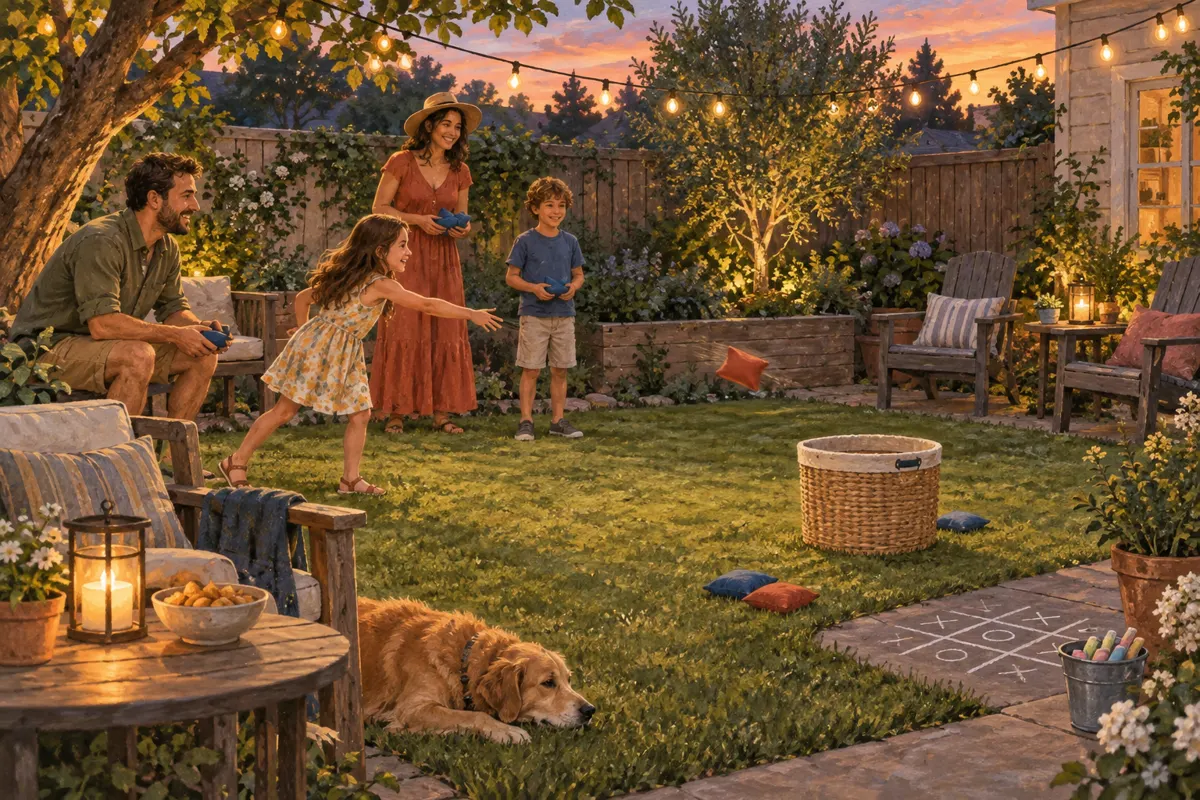
Organize a small backyard games night around one clear playing area, a few soft throwing props, and short rounds. Choose games with adjustable distances, keep seating outside the play zone, and swap activities instead of setting everything out at once. The proposed plan below combines simple target games, a group activity, and flexible rules for adults and kids.
Make room for one game at a time
Start with the usable space between furniture, plants, doors, and other obstacles. A narrow yard may suit a single throwing lane; a small patio may work better for a chalk grid or tabletop game. Leave enough room for players to take their turns without stepping into the seating area.
- Move loose objects and garden tools out of the playing area, and check for uneven or slippery spots.
- Choose one direction for throwing, facing away from windows, doors, and spectators.
- Mark a throwing line with chalk on suitable paving, or use an existing paving seam.
- Place chairs and refreshments to the side, keeping the route to the house clear.
- Store the next game’s supplies in a basket until the current round ends.
Before guests arrive, try the throwing position and retrieval route yourself. If someone must squeeze past the target to reach a chair, change the layout. For evening play, make sure players can see the ground, boundaries, and targets clearly.
Choose three games with simple equipment
Beanbag games, chalk activities, and games played mostly in place offer useful starting points. Here are three proposed versions using supplies you may already have. Their distances and scoring are house rules, so adjust them to your yard.
- Basket toss: Set an empty laundry basket or bucket on level ground. Give each player three beanbags or rolled socks and award one point for each that stays inside. Retrieve everything after the turn, while throwing is paused.
- Beanbag tic-tac-toe: Draw a nine-square grid with chalk on suitable paving. Two players or teams use differently colored beanbags or socks. Take turns tossing into empty squares; three in a row wins. A toss outside the grid uses up that turn.
- Simon Says: Pick a leader to call out small movements, such as clapping, touching shoulders, or raising one hand. Players follow only commands beginning with “Simon says.” For this casual version, let anyone who makes a mistake rejoin immediately.
If you already own a compact stacking or four-in-a-row game, use it as an optional quiet activity beside the seating area. Keep its pieces out of the throwing lane and avoid crowding the yard with extra equipment.
Adjust the challenge for each player
Choose throwing positions by comfort and ability rather than age alone. Someone can stand closer, use a larger target, or play seated. Agree on these options before scoring starts so players understand how their turns will work.
- Offer a closer and a farther throwing position, with the same number of attempts from either.
- Let beginners place tic-tac-toe pieces directly into the grid while others toss.
- Pair adults and children, alternating who plays first and who chooses the next move.
- Offer seated movements during Simon Says and let players skip uncomfortable actions.
- Switch to a shared goal if competition becomes frustrating, such as counting everyone’s successful basket tosses.
Use short rounds and a clear rotation
A proposed starting format is one practice turn followed by two scored turns per player. Explain the goal, demonstrate a turn, and start. Finish the round with equal attempts for everyone, then invite a different person to introduce the next game.
With a larger group, play in pairs while others watch from the side. Rotate after a fixed number of turns instead of letting winners stay indefinitely. Anyone waiting can keep score or announce turns, but those roles should be optional. Pause throwing whenever someone enters the lane to collect props.
Keep the evening easy to finish
Keep drinks within easy reach and take a break between games. Before the final round, ask players which activity they want to repeat. End while people still enjoy taking turns, then collect the soft props, clear the playing area, and return furniture to its usual place.
If rain or poor visibility interrupts play, move to an indoor tabletop game or seated Simon Says. Having that simple backup means the gathering can continue without rebuilding the backyard setup.