How to create a family drop zone when you have no mudroom
· Editorial team dallasnewskaty.com
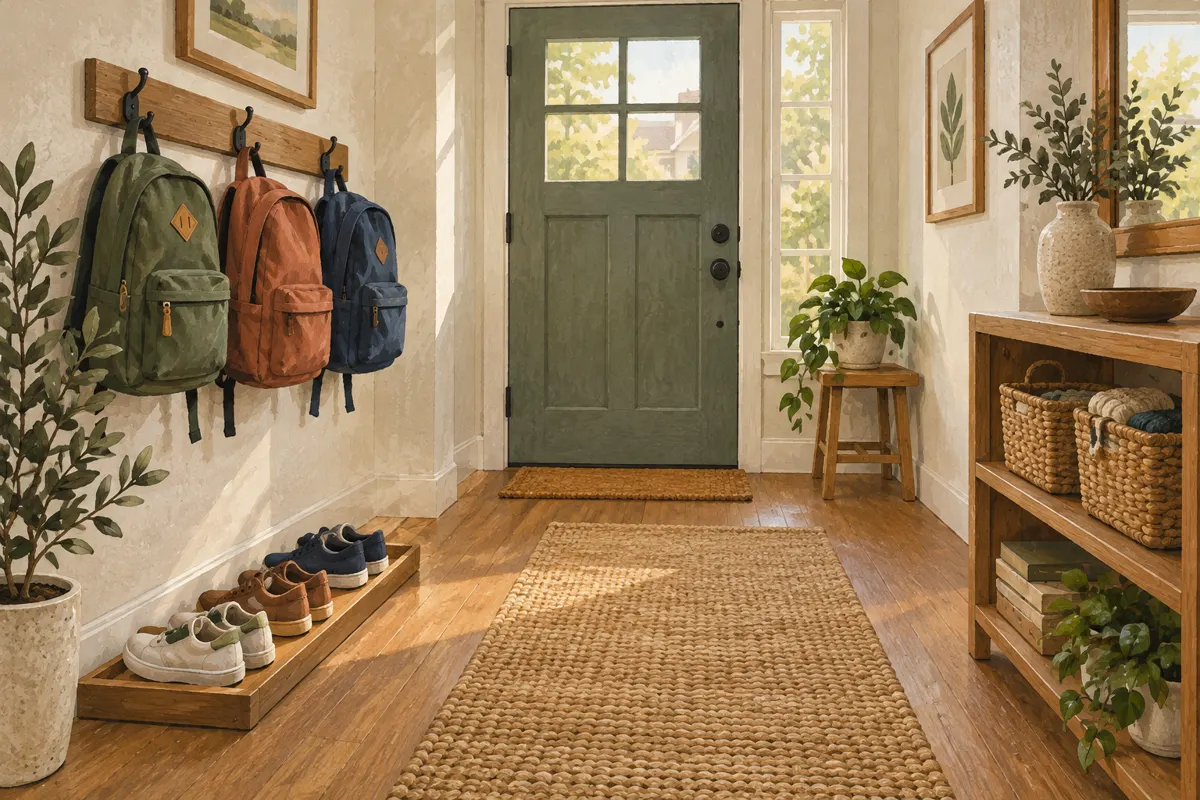
Create a family drop zone by giving each person a reachable place for a backpack, a defined spot for everyday shoes and a small container for loose essentials. A stretch of wall, part of a coat closet or a compact cabinet can do the job. Keep it near the door your family uses most, then build a short evening reset around it.
Choose a spot along your usual route
Start where bags already land. If everyone enters through the kitchen, a station beside the rarely used front door adds another task. Look for an available wall, a section of the hall closet or a cabinet near the everyday entrance. If the door opens directly into the living room, an existing shelf with assigned compartments may be enough.
Before choosing storage, measure the available width and depth with nearby doors fully open. Include baseboards and the space occupied by hanging bags. Place your actual backpacks and shoes in the proposed area to see whether people can pass comfortably. Keep doorways and access to household equipment clear.
Build around backpacks and everyday shoes
Choose storage for the items you handle every day first. Hooks use wall space; open cubbies provide a place to set bags down. A closet can combine both. A bench is optional: leave it out if it would crowd the entrance. Our proposed starting arrangement is one backpack space per person, with shoe storage below or beside it.
- For an available wall, use reachable hooks and a shallow shoe tray or rack below.
- For a coat closet, reserve a section for backpacks and use the lower area for shoes.
- For an existing cabinet, assign a compartment to each person and check that a packed backpack fits.
- For limited wall space, consider an over-the-door rack, checking its load limit and whether the door closes freely.
Check the storage hardware’s stated load limit and installation instructions against the bags it will hold. Position children’s spaces where they can put belongings away themselves, without climbing or needing an adult to lift a bag.
Give each person an obvious place
An assigned space removes the daily decision about where something belongs. Use a name, initial or recognizable picture to identify each person’s hook, cubby and small basket. Keep their storage together where possible, so a child can hang a backpack and put shoes away in the same stop.
Our proposal is to keep one everyday pair of shoes per person at the station, adding another only when regularly needed. Store occasional footwear elsewhere. Give small belongings a container with a specific purpose, such as hats or activity accessories, rather than one large basket that collects everything.
Walk through the arrival routine together: shoes into their space, backpack onto its hook or shelf, lunchbox to the kitchen and papers needing attention into one tray. Let children practice with their own belongings. If a step is awkward, adjust the setup before expecting it to become a habit.
Make room for tomorrow’s activity gear
Sports bags, music supplies and other activity gear can overwhelm a small entrance. List what needs a place before adding containers. Larger items may need a nearby closet or another assigned storage spot, while small accessories can fit in individual bins.
Our proposed rule is to bring only the next day’s activity bag into the drop zone. Keep equipment for other days in its regular storage location. If there is room, reserve one clearly defined shelf or floor space for the outgoing bag; avoid adding a loose pile beside the shoes.
Try a five-minute evening reset
A drop zone needs a routine as well as storage. We propose a five-minute reset after homework or before bedtime. Each family member handles their own space, with help where needed. Use the time to prepare for departure rather than reorganize the whole entrance.
- Remove lunchboxes, food containers and bottles that need washing.
- Check school papers and return completed homework or forms to the backpack.
- Pack what can be prepared tonight, then return the bag to its assigned space.
- Pair up tomorrow’s shoes and place the needed activity bag nearby.
- Return unrelated items to their usual homes and clear the walking path.
Once a week, check for stray papers, extra shoes and gear that no longer belongs there. If the same item repeatedly ends up on the floor, reconsider its assigned space: the hook may be hard to reach, the cubby too small or the basket already full.