How to reduce paper waste when wrapping gifts
· Editorial team dallasnewskaty.com
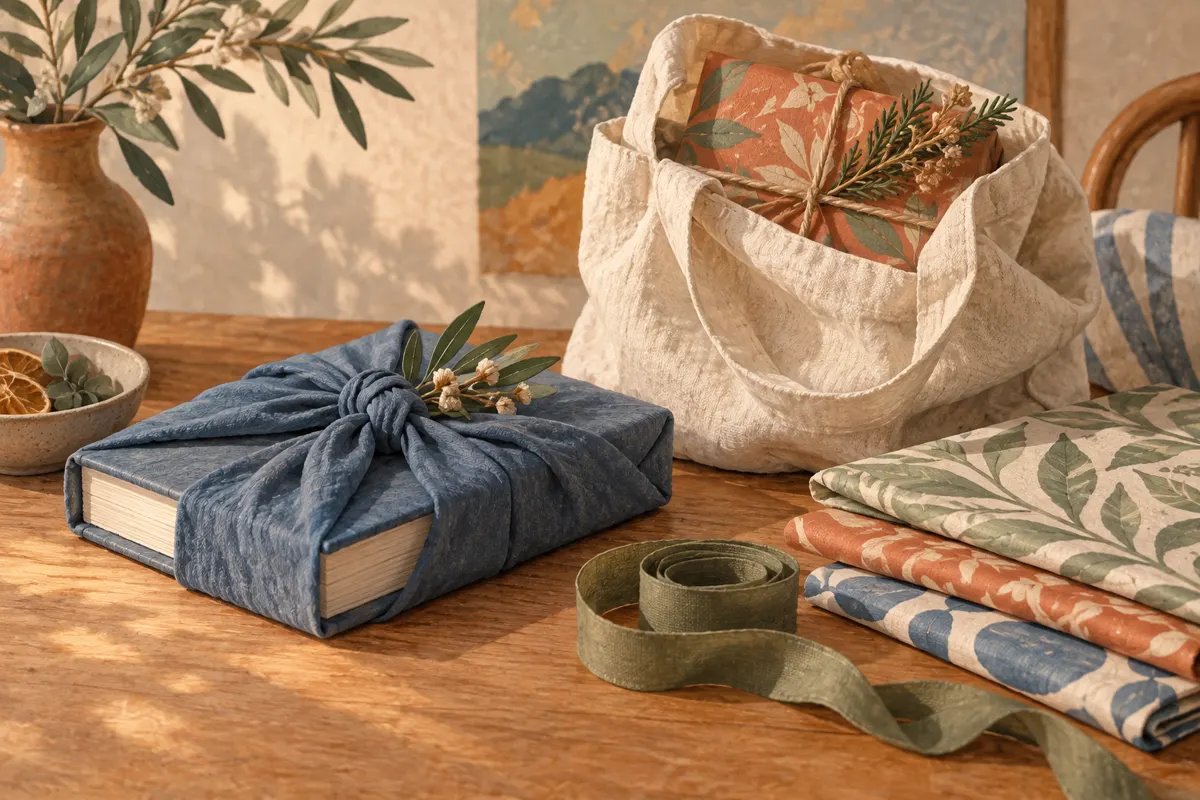
Reduce paper waste by wrapping gifts in fabric you already have, using a reusable bag, or giving saved paper another use. Match the wrapping to the gift’s shape, secure it with knots or reusable ribbon, and make it easy for the recipient to unwrap without tearing. Start with one gift and a suitable material from your cupboard.
Choose wrapping that fits the gift
A book or a rectangular box is a good starting point for fabric wrapping. A square cloth lets you fold two corners over the gift and tie the other two together. For an awkward shape, fabric gathered at both ends or a tote bag can be easier to manage.
Lay the gift on your chosen cloth before cutting anything. Check that the fabric covers it and leaves enough length to tie or overlap. If the ends barely meet, choose a larger piece. If there is bulky excess, fold it inward. The useful size depends on the gift’s height as well as its width.
- Use a finished cloth napkin or tea towel when it fits; it can become part of the present.
- Use leftover fabric, finishing raw edges with a hem, zigzag stitch, or pinking shears.
- Choose a cloth with enough flexibility to fold and tie comfortably.
Tie fabric around books and boxes
Furoshiki is a Japanese cloth-wrapping tradition. A simple knotted wrap works well for books and square boxes, with the fabric itself holding the folds in place.
- Spread a square cloth flat, with a corner pointing toward you, and place the gift in the center.
- Bring the nearest corner over the gift. Tuck the tip underneath if it reaches.
- Fold the opposite corner across, turning excess fabric inward for a tidy edge.
- Gather the two remaining corners over the middle and tie them in a double knot.
- Adjust the folds so the gift stays covered and the knot can still be untied.
For a more conventional parcel, fold fabric around a rectangular box as you would paper, tuck in the ends, and secure everything with ribbon. If you use pins while arranging the folds, remove every pin before handing over the gift.
Use bags or gathered fabric for awkward shapes
A tote bag is a straightforward reusable wrapper when neat folds are difficult. Our proposal: choose a clean bag that comfortably holds the gift, fold the top down, and tie a saved ribbon around it. Let the recipient know whether the bag is part of the gift or something you would like returned.
For a sturdy, unboxed object, try a candy-wrapper shape. Choose fabric long enough to leave a tail at each end and wide enough to overlap around the gift.
- Set the gift in the middle of the fabric and roll the cloth around it.
- Turn the exposed fabric edge inward.
- Gather the loose fabric beyond each end of the gift.
- Tie each gathered end with reusable ribbon and remove any temporary pins.
Give saved paper another use
Our proposal for gifts that suit paper: reuse an intact sheet from an earlier present or a clean paper bag. Open the sheet fully and check its size before trimming. Position worn areas underneath the gift, and fold torn edges inward when there is enough paper to do so.
- Fold around the gift first, then trim only the excess that prevents a neat fit.
- Hold overlapping folds with saved ribbon or string where practical.
- Make a small tag from a usable offcut rather than cutting into another sheet.
- Ask the recipient to loosen the ribbon and unfold the paper so it can be saved again.
Keep a small wrapping kit ready
Our storage proposal: keep reusable wrapping together in one drawer or box. Fold clean, dry cloths, flatten paper, and coil ribbons separately so they are easy to find. Keep only materials you expect to use; a manageable collection is more useful than a tangled pile.
After each exchange, return usable materials to the kit. If you want a cloth back, mention that when giving the present so there is no uncertainty. If the wrapping belongs to the recipient, explain how to untie it and suggest using it for their next gift. Reuse becomes easier when the materials stay accessible.